
In nature, transformation is certainly not an exception or a mere bump in the road, but the very essence of the evolutionary process.
Just as environmental conditions shape ecological systems by imposing continuous adaptations, design action models physical reality, forcing matter to respond to specific needs. One only has to observe the morphologies adopted by organisms to survive in extreme conditions, where isolation generates endemisms and radical specializations. It is a dynamic that architecture adopts, operating according to a logic comparable to that of punctuated equilibrium proposed by Stephen Jay Gould1: design does not proceed through constant evolution, but through sudden shifts and local ramifications, grafting punctual modifications destined to find, over time, their own condition of momentary equilibrium.
The traditional habitat represents an extraordinary example of this “natural” selection of practices, customs, typological recurrences, specific adaptations to climate, materials, locally available resources, and differentiated construction technologies. Repetition constitutes the rule that allows single life cycles to be surpassed, shifting modifications to a multi-generational scale, in the long time of evolution. The stone wall cell places the construction of a settlement on an ancestral dimension, of very long duration, constituting the bone structure of a place, immutable over time, while the roof and wooden horizontal structures refer to a sense of transience and continuous renewal. They recall the need for periodic caretaking, in a continuous and recurring handover that effectively builds the survival of the settlement itself, including within it a technical culture characteristic of know-how2.
Certain traumatic events, such as major floods or fires, can act on an ecosystem in a sudden and profound way, causing abrupt ecological crises: they sever the cyclical nature of slow processes, but at the same time generate the conditions for an evolutionary leap, offering the opportunity for new habitat forms.
The verb to transform indicates precisely this: the process of altering a form that manages to respond to new external stimuli, while preserving the identity of the original subject.
Stasis
This processual dimension, dilated over time, clashes today with the cumbersomeness of public procedures, whose slowness contrasts with transformation processes and the expectations they generate. The realization of a medium-sized public work (under one million euros) in Italy takes about four and a half years, with timelines that grow exponentially as the amount increases3. These public-led processes follow procedures longer than a legislative term, often proving incapable of responding adaptively and promptly to real needs. The complexity of the process and the logic of chasing the funding of the moment often generate inadequate "mutations" or sterile investments, which risk condemning territories to a dangerous immobility.
The collapse of this centralized and linear model requires a radical paradigm shift, especially within inland and marginal areas, where demographic decline and the abandonment of urban centers are much faster than the administrative machine's ability to respond. When bureaucratic time misaligns so deeply with the biological and social time of communities, public works risk configuring themselves as posthumous fossils, weakened and outdated already at the time of their inauguration and destined to produce limited effects.
Transformation requires a trigger, a first step capable of activating a desire for spaces. The project can be structured as an incremental process, renouncing a condition of immutable fixity in favor of an approach that proceeds specifically and purposefully through the construction of an expectation for spaces that limits their stasis. Caring for territories stems from an awareness of this temporal complexity. Within the National Strategy for Inner Areas (SNAI), the integration of different actions constitutes the starting point for initiating a "bottom-up" adaptation, deeply rooted in the places. It is about finding new forms of rootedness that admit a precautionary principle4 and that are framed within three key actions:
- reading environmental constraints not as limits, but as the selective pressure necessary to generate new opportunities;
- assuming the nature of the transformations that the territories have undergone, to generate new ones starting from an intrinsic predisposition to change;
- developing construction techniques based on available resources that can generate new local transformation supply chains.
The action of generative architectures fits into this ecosystemic logic: transformation devices that act as controlled mutations. Conceived as experimental tests or 1:1 scale models, these architectures offer a physical response to the environment through economic, low-cost, and low-tech solutions. They are architectural organisms capable of testing the transformative potential of places, exploring new spatial possibilities with limited resources. Although the temporariness of the intervention does not produce structural effects in the short term, it acts on long-term processes to help understand the rules that govern it.
In this sense, generative architectures function like pioneer species: first organisms capable of colonizing inhospitable territories that allow verifying the adaptability of spaces and their readiness for change. Just as lichens modify the rocky substrate making it fertile for more complex species, these reversible devices attempt to activate the collective imagination, configuring themselves as metabolic triggers. Transformation thus occurs in a twofold manner: at the scale of the device (the organism) and at the scale of the habitat in which it is inserted, initiating further transformation processes.
Appearances
The famous naturalist Carl Linnaeus, father of taxonomy, defined the names of the various developmental stages of insects, designating the first evolutionary stage as larva and the mature insect as imago (image). The ethymological nature of the two terms clarifies the distinction: if the image is the completed form of a species, the larva is its first appearance, the mask, the first stage of transformation of the perfect insect5. In this sense, the final form represents only one moment of the modification that an organism undergoes, and whose transformation repeats cyclically.
Habitat systems reflect this dual and multiscalar system, starting from their primary components up to the system as a whole. In an essay published in Lotus dedicated to urban regeneration, Pierluigi Nicolin emphasizes the need for a return to typo-morphology to reinterpret places6. Working with contexts means identifying the dominant elements that constitute a spatial DNA capable of supporting transformation without losing the identity of the site. It means placing oneself in continuity with a tradition of building within the built environment, which is the result of an idea of the internal metabolism of urban form, and from which future transformations can move.
Generative architectures start precisely from the invariants of places: the enclosure, the cell, the wall, the threshold, the podium, the base. These elements represent the long-lasting genetic traits that the design reinterprets to weave new lines of connection. It is a matter of inscribing new architectures within a tradition made of constants that do not concern materials so much as the spatial invariants that historically have guaranteed the survival of dwelling and its relational hierarchies.
Serdiana, Mogoro, Selegas, Orani, and Ortueri build a geography of specific dwelling cultures, united by the value of the wall and the courtyard, permanences of historical fabrics that can absorb new forms of interpretation and variation to the rules of typological association. In these cases, the wall plays the role of the formal structure of the settlement, defining the relations between public and private, between interior and exterior. Similarly, doubling, folding, and interrupting represent the modes of action through which variations are articulated, reinterpreting techniques and matter, and adapting to the needs that communities project onto spaces, outlining a process of conservation and selection of forms inherent to those fabrics7. These are often implicit needs in the places that can be revealed through activation mechanisms, transformation triggers that appropriate the invariants by reinterpreting them in a new way. Generative architectures act in this sense, recursively using certain elements specific to the traditional habitat, but proposing an unprecedented form. The architectures propose morphological variants that question the permanence of the void and the continuous wall that defines it, building possible configurations that orient new scenarios of change.
Sudden Shifts
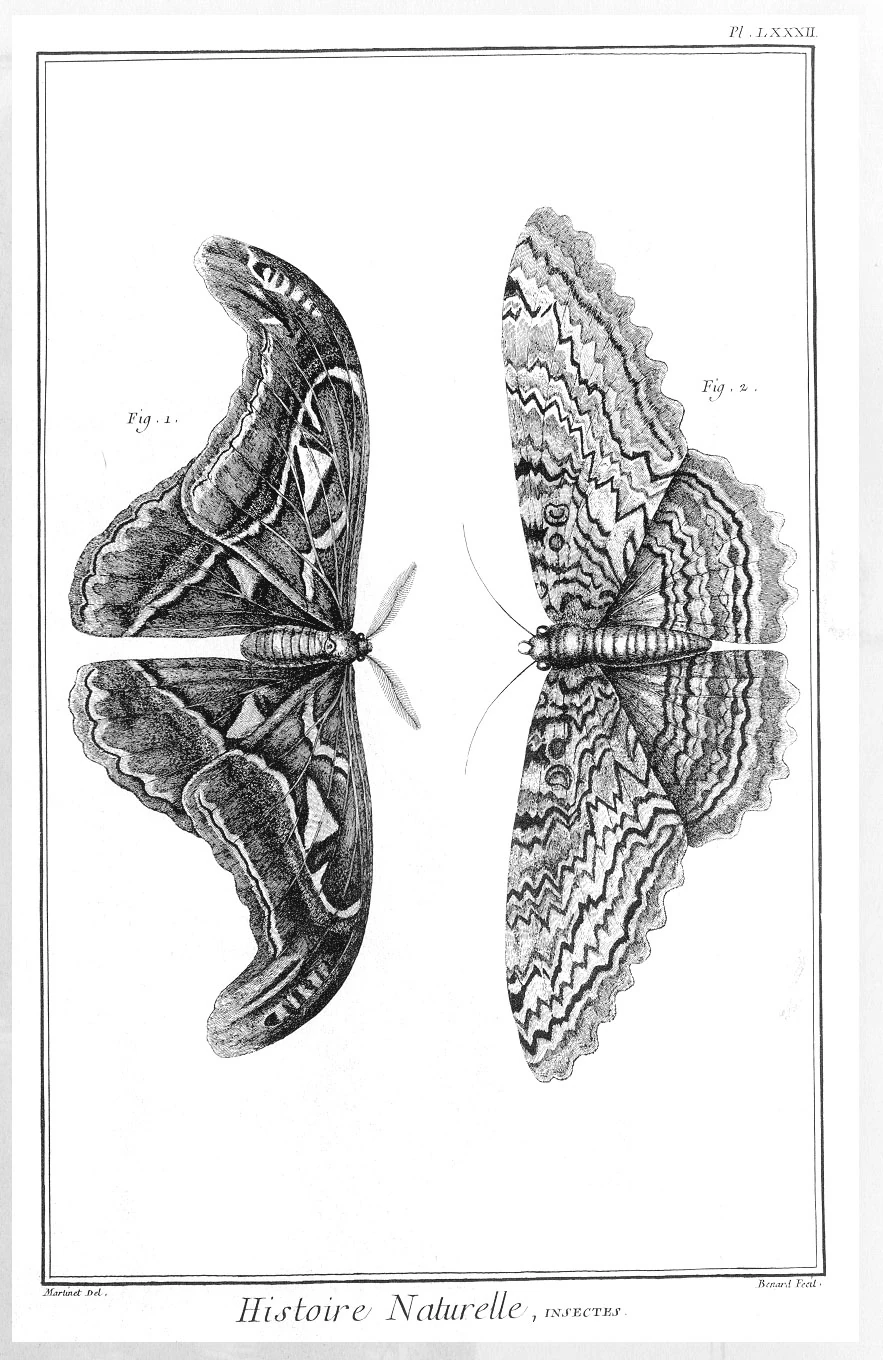
The word pavilion finds its etymological root in the Latin term papilio, butterfly, designating short-lived architectures that play a central role in ecological and ecosystemic cycles. If we shift our attention from the final stage of the species and extend it to its entire biological cycle, considering the path from egg to egg and expanding the duration to its different states, including those of caterpillar and chrysalis, we avoid considering the butterfly as a reality in itself, but rather as the momentary expression of a specific phase in the life of a given species.
Similarly, the pavilion must not be evaluated solely for its initial or final form, but as part of a process within which the transformation of a space is inscribed.
Generative architectures propose a rapid, sudden transformation, leaving a tangible and concrete outcome. The short lifespan of these architectures is a strength for the experimental scope of these interventions; it allows exploring construction techniques based on the use of cheap materials, quickly reversible, and modular for single elements. The artisanal dimension of the project allows reflecting on the construction detail, on a rediscovered artisanal simplicity of an architecture made by hand.
The repetition of the structural module represents a constant in the interventions that allows optimizing the construction process and focusing on the serial realization of certain elements. It is not, therefore, a standardized repetition of the devices but of the elements that compose them, generating ever-new spaces and details in their combination.
The breakdown of the project into discrete components opens up possibilities for remodeling the projects into parts, relocalizable in other forms or functions. This tectonic construction allows for a versatility and speed of transformation that make it easily executable even by non-professionals, creating an essentially dry construction site that works through discrete, light, and easily maneuverable elements.
The rule of transformation essentially lies in three key factors:
- repeatability of the structure, to guarantee construction logic and resource optimization;
- construction simplicity, to make building an experience for everyone (students, inhabitants, and communities);
- formal coherence, to maintain a dialogue with the surrounding context.
The wall constitutes the founding construction element of transformation interventions, which is explored at different scales: from that of direct confrontation with the place, to its tectonic and constructive nature, making it an instrument of mediation with the ground, a structural frame for horizontal structures, a light diaphragm between the inside and outside of a space. In this sense, the design tries to build planes and volumes that work on the composition of highly vibrated screens, iridescent surfaces that allow creating protected and shaded spaces, obtained through easily manipulated technologies consistent with the design principles at various scales. It is also a flexible construction model, somewhat rudimentary, which admits execution error in construction as an almost certain condition and is able to structurally absorb it by over-sizing the constraints and thanks to the workability of the wooden battens that support execution imprecision within a material and formal continuity.
These characteristics specific to generative architectures distance this habitat model from the long-lasting one, but build a new model that works in symbiosis with what is there. They configure themselves above all as didactic and pedagogical experiences of taking care of spaces and deepening the small scale. The construction site becomes an open transformation laboratory where students, teachers, and inhabitants share an experience of modifying a space. As Vittorio Gregotti argues, architecture assumes modification as an operative principle, with a double meaning: namely, the recognition of what already exists and taking a stance by establishing a critical dialogue with what is there9.
Endemisms
In evolutionary biology, islands are the geographical places where species develop the most extraordinary adaptations and the most marked endemisms, due to isolation and limited resources10. In this sense, Sardinia represents an ideal island-laboratory: a closed ecosystem, a dense reservoir of energies, material persistences, and stratified cultures where this model of temporary transformation can be tested and repeated, starting from the acceptance of the limits that an island imposes and transforming them into a profound relationship with places11.
Leveraging the resistances and persistences of a territory whose profound value lies in a widespread and “minor” heritage—a true architectural biodiversity supported by the robustness of the relational and community network and not by the single monumental or exceptional “specimen”—temporary transformation acquires a clear key to interpretation and great operational urgency.
Through the design of generative habitats, a direct interface with historical invariants is sought, starting from those connecting elements between public and private that constitute the deep connective tissue of the traditional settlement.
In 1790, Johann Wolfgang von Goethe used the concept of the “study of form” (Morphology) referring to botanical cataloging, searching for an original form (Urpflanze) from which all others would have derived by adaptation, effectively introducing a theory on the modification of organic bodies in response to external environmental stimuli12.
A few years later, Goethe himself focused on the foundational value of direct experience and the need to constantly reiterate it in order to build a scientific and empirical method.
The generative habitat intends the action of transforming precisely in this sense, not so much as a network of interventions, but as repetitions of different experiences, montages, tests, adaptations of forms to the circumstances of the places13.
It is from these circumstances that the generative habitat learns, and it is upon these that it acts and transforms.
Notes
1. Stephen Jay Gould, Il pollice del panda. Riflessioni sulla storia naturale, il Saggiatore, Milano 2017. (it. vers. S. Cabib a cura di) Stephen Jay Gould, The Panda's Thumb. More Reflections in Natural History, W. W. Norton & Company, New York 1980, «The history of most fossil species includes two features particularly inconsistent with gradualism:
Stasis. Most species exhibit no directional change during their tenure on earth.
Sudden appearance. In any local area, a species does not arise gradually [...] it appears all at once and 'fully formed'».
2. Alvaro Siza, Viver uma casa, in A. Siza, Dominique Machabert (edited by), Des Mots de rien du tout: palavras sem importancia, PU Saint-Etienne, Saint Etienne 2002. «I have never been able to build a house, an authentic house. I am not talking about projecting and building houses, a minor thing that I can still do, I don't know if rightly so. [...] Living in a house, in an authentic house, is a full-time profession. [...] That is why I consider it heroic to own, maintain and renovate a house. In my opinion there should exist the Order of House-Curators and every year the respective commendation and a high pecuniary prize should be awarded» p.78-85.
4. Antonello Sanna, Architettura sostenibile, in Antonio Angelillo, Adriano Dessì, Giorgio Peghin (a cura di) Apprendere dal paesaggio. Atlante del Master in architettura del paesaggio, Libria, Melfi 2025. «A new design for the future rural landscape must respond to the principles around which an increasingly broad consensus is forming among the scientific community as well as social and institutional stakeholders: the limitation (if not the end) of land consumption, and the precautionary principle, which can be interpreted both as the maximum reversibility of interventions and as consistency with the ecological rules of the rural environment» p.156.
5. Stephen Jay Gould, Risplendi grande lucciola. Riflessioni di storia naturale, Feltrinelli, Milano 2018.
6. Pierluigi Nicolin, Due note sulla rigenerazione urbana, Lotus 174, Ideas for regeneration, Editoriale Lotus, Milano 2022. «The presence of a grammar and a syntax within the mosaic of urban morphology makes it possible not only to replace individual building plots with their differences, but also to shape green spaces in the city; not only with avenues, corridors, parks, gardens, allotments, etc., but also, if necessary, with areas left to the unhindered entry of nature».
7. Pezo Von Ellrichshausen, Memoria Morbida, in Pezo Von Ellrichshausen, Marco Moro (a cura di) Forma del sapere, Thymos Book, Aversa 2025. «Imagining a possible future reality, describing it in advance with limited means, understanding the natural and cultural impact it will come to inhabit [...], the professional, despite the technological arsenal at their disposal, returns to history books just as the carpenter relies on traditional knowledge. Thus, a sort of natural continuity emerges, a process of conservation and selection» p.51.
9. Vittorio Gregotti, Architettura come modificazione, Casabella 498-499, Milano 1984. «The idea of modification means to us neither restoration nor reuse [...] but rather the design of a process that has at its center the understanding of the rules and meaning of the historical (and physical) material upon which one operates».
10. John Bristol Foster, Evolution of Mammals on Islands, Nature, vol. 202, no. 4929, 1964. The biologist Foster discusses the island rule regarding the development of specific endemisms: «On islands, species tend to converge toward the most energy-efficient size for that particular environment. In the absence of predation, any excess mass unnecessary for survival is eliminated by natural selection».
11. Emilio Tuñón Álvarez, Geografia como cuerpo y arquitectura como geografia. Constricciones y potencialidad en la arquitectura de Paulo David, 2G n. 47, Paulo David, Gustavo Gili, Barcelona 2008, p.9.
12. Johan von Goethe, Urfplanze. La pianta originaria, in Michele Caja, Martina Landsberger, Silvia Malcovati (edited by) Tipo Forma Figura. Il dibattito internazionale 1970-1990, Libraccio, Milano 2021.
13. Fernando Távora, Carlotta Torricelli (edited by), Dell’organizzazione dello spazio, Nottetempo, Milano 2021.