
The Strategic Role of Public Green Space in the Contemporary City
Public green space today represents one of the fundamental elements for the quality of urban environments and for the well-being of the communities that inhabit them. In a context characterized by increasing urbanization, the progressive reduction of open spaces, and a generalized rise in environmental and social stress, the presence of greenery assumes a strategic role that goes far beyond a purely decorative or aesthetic dimension. Green spaces in fact constitute an essential component of urban infrastructure—defined as “green infrastructure”—capable of profoundly influencing environmental quality, public health, and the overall livability of human settlements.
The importance of these areas is expressed through a wide range of ecosystem services. Urban greenery contributes significantly to the improvement of microclimatic conditions, the mitigation of urban heat island effects, the regulation of stormwater runoff, and the filtration of atmospheric pollutants, thereby markedly improving air quality. At the same time, greenery plays a social and cultural role of primary importance: parks, gardens, tree-lined avenues, and neighborhood open spaces represent environments in which it is possible to re-establish direct contact with nature, even within heavily built-up contexts. They offer places for meeting, leisure, rest, and social interaction, contributing to a more balanced and sustainable perception of lived space.
University Spaces as Laboratories of Urban Integration
Within this general framework, green spaces in university areas can be interpreted as particularly significant examples of integration between nature and the city. Campuses, while maintaining a specific educational and institutional function, share many characteristics of urban public spaces: they are places traversed daily by a plurality of users-students, faculty, staff, and citizens – and often act as permeable areas that connect with the surrounding urban fabric.
University green space systems, when well designed and managed, demonstrate how nature can enhance the quality of everyday experience. As places of intensive study and work, they make especially evident the importance of the regenerative dimension of greenery: accessible and well-distributed areas allow for restorative breaks necessary to counter cognitive fatigue, encourage informal encounters, and help create more balanced and humane environments1. In an era in which time spent in enclosed and artificial environments is steadily increasing, university greenery assumes a central value as a mediating space between the functional needs of the institution and the emotional and physical needs of individuals2.
Urban Regeneration and Regenerative Design
Contemporary design of urban green spaces requires a holistic vision capable of overcoming the idea of greenery as a residual element or mere volumetric compensation. Green spaces must be conceived as an integral part of urban design3, capable of connecting spaces, functions, and people through ecological and perceptual continuity that makes urban systems more coherent, accessible, and resilient.
A central theme in current architectural and urban planning debate is urban regeneration through greenery. In many contexts, the redevelopment of degraded or underused spaces takes place precisely through the reintroduction of vegetation, which becomes a tool for both physical and symbolic transformation of places. Greenery is able to profoundly modify the perception of spaces, making them more welcoming, recognizable, and safe, while stimulating new uses and new forms of appropriation by citizens. This process is particularly effective when greenery is accompanied by design attentive to usability and accessibility, becoming an operational device for urban transformation.
Botanical Choice as the Foundation of Sustainability
Sustainable management of green spaces cannot disregard careful reflection on botanical choices, which represent the point of contact between design, maintenance, and environmental sustainability. The selection of plant species directly affects management costs, water consumption, and the capacity of green spaces to adapt to climate change4.
In the Mediterranean context, there is growing attention to the use of native species or those consistent with the local bioclimatic context. These species are characterized by greater resistance to drought, high summer temperatures, and environmental stresses typical of cities. The adoption of broad-canopy trees, such as the carob tree ( Ceratonia siliqua ) or the hackberry ( Celtis australis ), helps improve the microclimate through effective shading, reducing the surface temperature of paved areas.
Alongside trees, the use of evergreen shrubs and hardy groundcover species allows greenery to be structured with continuity throughout the year. Species such as the Judas tree (Cercis siliquastrum), mastic tree (Pistacia lentiscus), strawberry tree (Arbutus unedo), and bay laurel (Laurus nobilis) effectively meet functional and ecological requirements, contributing to the increase of urban biodiversity. The integration of aromatic species such as myrtle, rosemary, lavender, and helichrysum strengthens the overall resilience of the system and enhances its sensory quality, offering a perceptual experience rich in olfactory and chromatic stimuli5.
Resource Management and Water Conservation
Water conservation plays a central role in sustainable management. Design must incorporate strategies aimed at reducing irrigation needs, especially in areas subject to water stress. Among the most effective solutions are the use of natural mulches, appropriate soil preparation to improve water retention capacity, and the adoption of high-efficiency irrigation systems. Furthermore, according to CIRIA6, the integration of rainwater harvesting and reuse systems (Water Sensitive Urban Design) represents a fundamental frontier. Collecting rainwater for irrigation not only reduces the consumption of potable water, but also helps mitigate the load on urban sewer systems during extreme weather events, increasing the overall environmental resilience of campuses and regenerated neighborhoods.
“Controlled Spontaneity” and Biodiversity
Within this perspective lies the concept of the spontaneous development of greenery, understood as the recognition and enhancement of natural vegetation growth processes7. For a long time, urban greenery was managed according to rigid formal models that tended to exclude any form of irregularity. Today, by contrast, an approach is emerging that recognizes the ecological and landscape value of less artificial forms of greenery.
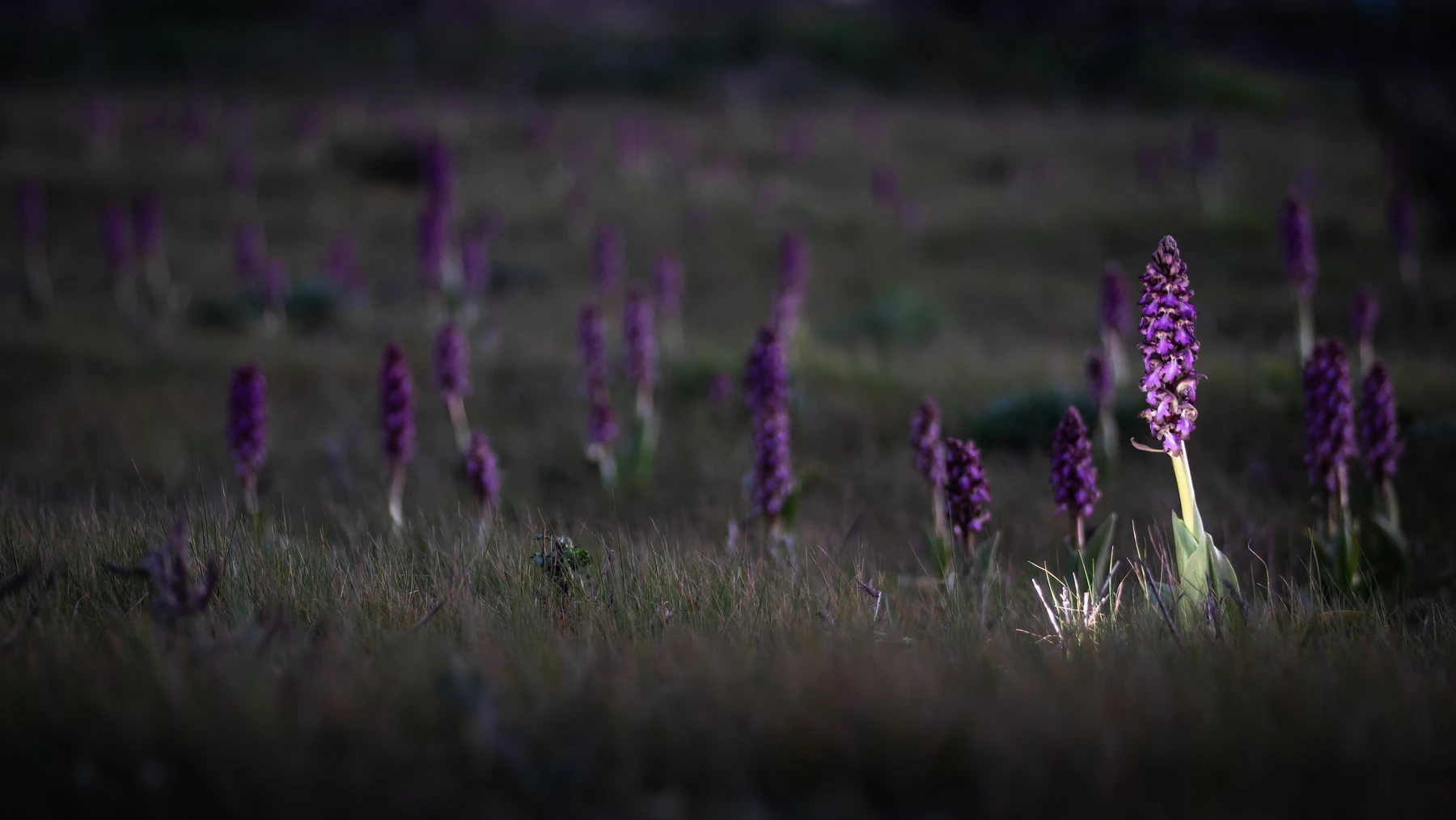
Controlled spontaneity does not imply neglect of space, but rather requires conscious management that accepts and governs natural processes. Integrating areas left to controlled evolution, reduced-mowing lawns, or less intensively maintained vegetated strips makes it possible to reduce the environmental impact of management and significantly increase urban biodiversity, offering habitats for microfauna and pollinators. These environments are more varied, dynamic, and perceptually stimulating, offering a sense of “naturalness” often absent in overly formal gardens.
Perceptual Dimension, Well-being, and Health
The perceptual and sensory dimension of green spaces is a determining factor for public health. Numerous studies in environmental psychology show8 that the presence of accessible green spaces promotes stress reduction, improves concentration abilities, and encourages positive social behaviors. The opportunity to spend time in a natural environment, even for short periods, facilitates recovery from psychophysical stress and enhances the quality of everyday experience in public spaces. In university settings, characterized by significant cognitive demands, greenery becomes a device for social mediation. It contributes to the creation of recognizable, welcoming, and identity-rich places, where the beauty of the natural landscape merges with the educational function. Greenery thus becomes an integral part of the learning experience, acting as a “third educator” that promotes environmental awareness.
Case Studies and Operational Tools: Sa Duchessa and Is Mirrionis
Concrete experiences of regeneration, such as those developed in the contexts of Unicasa Sa Duchessa and Is Mirrionis–Tersicore, demonstrate how greenery can become a true operational tool for urban transformation. In these contexts, design choices have favored gradual and adaptive interventions, capable of improving the ecological quality of spaces without resorting to solutions with high economic or environmental impact. In these cases, greenery has been used as a flexible infrastructure. Through the introduction of resilient species and the enhancement of urban naturalness, the interventions have made it possible to monitor the evolution of the landscape over time, adapting management to the actual responses of the territory and local communities. The adopted approach does not view greenery as a static element, but as a dynamic organism capable of accompanying processes of social and urban change.
Educational Function and Long-Term Management
On university campuses, greenery also takes on a didactic and experimental function, configuring itself as an open-air laboratory. The introduction of informational devices, thematic routes, and species labeling systems makes design choices visible, strengthening users’ environmental awareness. This approach transforms the simple garden into a tool for active learning about sustainability practices. Ultimately, greenery is configured as a slow but persistent infrastructure9. Its effectiveness does not lie in the immediate spectacle of a newly completed project, but in its capacity for adaptation and in the quality of its long-term management. It is precisely this temporal dimension that makes greenery the central tool for building more resilient, inclusive, and sustainable cities and campuses, capable of responding to the climatic and social challenges of the future.
Notes
1. Konstantinos Tzoulas et al. Promoting ecosystem and human health in urban areas using Green Infrastructure, in Landscape and Urban Planning, 81(3), 2007, pp.167–178.
2. Timothy Beatley, Biophilic Cities: Integrating Nature into Urban Design and Planning, Island Press, Princeton 2011.
3. John F. Ahern, From fail-safe to safe-to-fail: Sustainability and resilience in the new urban world, in Landscape and Urban Planning, 2011.
4. Francesco Ferrini, Il verde urbano: progettazione, gestione e sostenibilità, Firenze University Press, Firenze 2017.
5. Francesco Ferrini, Alessio Fini, Linee guida per una gestione sostenibile del verde urbano, ETS, Pisa 2011.
6. CIRIA, Water Sensitive Urban Design. London 2015.
7. Nigel Dunnett e James Hitchmough, The Dynamic Landscape, Taylor & Francis, 2004.
8. Roger S. Ulrich, Stress recovery during exposure to natural and urban environments, in Journal of Environmental Psychology, 1991.
9. John F. Ahern, Op. cit.
European Environment Agency. Urban adaptation to climate change in Europe, 2016.
European Environment Agency, Urban green infrastructure and ecosystem services, 2019.