
All territories, from the most densely populated to the most marginal, are today traversed by invisible forces that progressively alter their already fragile equilibria: climatic transformations, demographic shifts, intermittent economies, new forms of mobility, digital platforms, seasonal tourism, processes of abandonment, and sudden reactivations. As a consequence, the relationships between people and space are changing; so too are the ways in which places are inhabited, produced, traversed, and perceived.
Many of these transformations occur beneath the surface. They do not immediately manifest themselves in the built form of the territory but accumulate silently over time. For this reason, certain contemporary landscapes appear increasingly difficult to interpret. Traditional categories of planning and design, permanence, stability, linear prediction, often prove inadequate for understanding territories that continue to change while they are being observed. As Vittorio Gregotti writes in Tempo e progetto, «our present is full of ghosts: not only the endless ghosts of the fragments of the past, but above all those of the interpretation of the present which, in its stable uncertainty, continually renew themselves while one acts through different projects of possible transformation of the surrounding reality»¹. It is perhaps precisely from this condition that one of the deepest crises of contemporary design emerges.
Architects have long operated under the assumption that a territory can be understood prior to intervention and that architecture therefore represents the built form, the materialization, of a spatial solution. Design has traditionally been conceived as the phase of action or reaction to the necessity of transforming a place: the project is regarded as the consequence of an analysis of existing conditions, while knowledge of the site is considered a stable premise upon which a definitive response can be constructed. First comes study and research, then intervention. First interpretation, then transformation.
Today, however logical and coherent this sequence may appear, it is becoming increasingly fragile.
In the contemporary age, characterized by an ever-accelerating succession of events, what has been described as “short-term temporality”² has become the dominant level of human experience. Younger generations in particular seem to have internalized a necessary disposition toward uncertainty regarding the future, or, more accurately, they are compelled to confront it and, in many cases, endure it. Just as a territory situated along a geological fault line is subject to continuous seismic disturbances, contemporary humanity appears to advance along a kind of “temporal fault,” where the recurring shocks are not earthquakes but the cascading effects of constant technological innovations and socio-cultural revolutions. These transformations follow one another with such rapidity that they continuously alter the economic, environmental, and social conditions of territories. Within this scenario, it becomes increasingly difficult for those involved in the transformation of urban and rural space to clearly separate the moment of observation from that of action. Places, and their contexts, including the living fabric in all its complexity and diversity, inevitably change while they are being analyzed, and they may change even more profoundly between the preliminary stages of study and the eventual construction of a building.
If this condition were not already sufficiently challenging for architects to accept and internalize, modern epistemology introduces an additional layer of complexity. Not only does reality change so rapidly that it destabilizes the traditional analysis-design sequence, but the very act of observing and studying a phenomenon may itself contribute to its transformation. In short, «what we observe is not nature itself, but nature exposed to our methods of questioning»³. This idea emerges as a collateral implication of Heisenberg’s Uncertainty Principle and constitutes one of the most celebrated and fascinating examples of how a discovery in physics generated broader implications capable of undermining some of the fundamental assumptions of epistemology. In 1927, the German physicist Werner Karl Heisenberg proposed, in essence, that it is impossible to determine simultaneously and with absolute precision certain pairs of conjugate physical quantities, such as the position and momentum of a particle, because the very act of measuring them inevitably alters them.
From the reflections generated by this principle emerged, more or less directly over the following decades, a long series of critiques concerning the objectivity of science and its methods. Among the most influential contributors to these debates were thinkers such as Steven Shapin and Paul Feyerabend. Through their writings4,the notion increasingly gained acceptance that the figure of a completely impartial observer, entirely external to the reality being studied, belongs less to actual scientific practice than to an aspirational, yet ultimately unattainable, ideal.
The very construction of a territorial map or architectural plan, among the most widely used and indispensable tools of preliminary analysis in both research and design, already constitutes a first transformative and subjective act on the part of the observer, researcher, or architect. The belief that reality can be represented without any loss of information, or without the influence of conscious or unconscious adherence to an ideological paradigm5, can be considered, at best, illusory.Every individual, even when convinced of having successfully positioned themselves outside the equation of inquiry, inevitably operates through a series of filters, selections, syntheses, exclusions, and omissions that generate results which remain open to interpretation. Were this not the case, ten different architects would not produce ten different projects, nor would it be necessary to study a territory more than once in order to determine exactly how to intervene without any margin of error.
If even the so-called hard sciences reveal an unavoidable degree of subjectivity, not as a consequence of error but of necessity, then the discipline of design can only be expected to display this characteristic in an even more evident and pronounced form. Moreover, even assuming the technical and ethical capacity to pursue maximum precision and objectivity, the complexity of reality will always tend to escape the observer’s grasp, as illustrated in Jorge Luis Borges’s brief tale of the map of the empire drawn at a scale of 1:16. One of the most fascinating implications of Borges’s text is the paradox arising from the impossibility of producing a map so precise that it becomes a perfect 1:1 copy of the empire itself, a map so vast and detailed that it would need to be unfolded across the very territory it seeks to represent, ultimately covering it entirely. Yet even at the moment when such a map is successfully produced by the empire’s cartographers, it remains deficient in one crucial respect: it lacks a representation of itself. If the map were truly at a 1:1 scale and entirely exhaustive, it would have to include every city, every road, every person, and also... itself. At that point, a paradox of self-reference would emerge: the map would need to contain a representation of the map that contains a representation of the map, and so on ad infinitum. Every representation necessarily entails a choice, a selection, a form of interpretation that, in the very act of restituting reality, also transforms it. As Alfred Korzybski famously stated in 1933, «the map is not the territory»”7. Representation does not coincide with reality; rather, it translates reality according to a particular language, scale, and purpose. Furthermore, as Gregory Bateson observed in 1970, the map modifies the territory. Every act of knowledge 8, representation, or description produces concrete effects on the perception and management of the place being represented.
In both examples discussed, the empirical case of the Uncertainty Principle and the conceptual, allegorical case of the 1:1 map of the empire, even when analysis strives toward absolute precision, it ultimately encounters practical, theoretical, or technological limits. Added to these limitations are those of a temporal nature, linked to the changing conditions of context over time, as well as those deriving from human, ethical, and ideological factors. Together, these constraints reveal analytical processes for what they inevitably are: profoundly fallible and inherently subjective practices.
For these reasons, the traditional process of architectural design, founded upon a stable and objective preliminary understanding of the analyzed context, progressively enters into crisis. Evidence of this can be found in the countless examples of large industrial facilities and multimillion-dollar projects conceived with the certainty of generating profound and lasting transformations in the territories where they were built, only to remain unfinished, to be completed without ever becoming operational, or to be abandoned after only a few years. The time required to fully understand a territory, within the practical limits described above, and subsequently translate that understanding into built form often proves incompatible with the speed of contemporary territorial transformations. The risk is therefore that of producing definitive architectures, highly transformative spatial solutions, environmentally impactful interventions, and major economic investments for realities that are no longer definitive, or at the very least change far more frequently than in the past. This does not imply that urban and rural landscapes have lost their enduring structures or their deep, identity-forming characteristics associated with the longue durée. Rather, it suggests the need for greater caution in considering such elements immutable, binding, and sufficient in themselves to define a place. Reliance on the invariants of a landscape alone is no longer enough to guarantee the effectiveness of proposed architectural solutions.
The contemporary architect therefore confronts a reality that is simultaneously highly unstable and deeply in need of intervention. Within such conditions, design should perhaps no longer be understood solely as the process capable of providing definitive and immutable responses over long, or very long, timeframes9. It may no longer be sufficient even to generate architectures capable of resisting rapid contextual changes through the much-invoked concept of resilience, nor to pursue the paradigm of antifragility. Even such advanced structures would remain subject to the problems associated with the lengthy durations of analysis, planning, and construction. The most carefully designed antifragile architecture, if developed through a conventional building process, would only begin to exert a tangible impact on its site many years after the initial stages of analysis. During this period, conditions of degradation, abandonment, or underutilization would continue unabated.
Throughout this interval, this technical and administrative limbo that precedes permanent transformation, uncertainties multiply. Some projects fail. Funding is lost. Meanwhile, the condition of the site does not improve; rather, it often continues its trajectory of decline. Within this perspective, generative architectures assume a decisive role. They colonize the suspended time of transition and act immediately within space, producing beneficial change while simultaneously contributing to the understanding of the observed system. Their reversible and experimental nature enables them to overcome the traditional separation between analysis and design, transforming intervention itself into a form of active inquiry. The objective is not to anticipate a definitive solution but rather to introduce devices capable of testing hypotheses, activating relationships, and rendering observable phenomena that often remain invisible to conventional preliminary analyses.
Design thus ceases to be merely the consequence of knowledge already acquired about a site, knowledge that may at times be broadly shared yet remains difficult to justify scientifically,and instead becomes a tool for generating new knowledge.10 This condition allows generative architectures to be reinterpreted as “operative epistemic devices”. Their function is not limited to transforming space; rather, it consists in creating the conditions through which territories can reveal behaviors, uses, and dynamics that would otherwise remain latent. Temporary intervention therefore acquires the value of a situated experiment: a form of action capable of generating transformation and understanding simultaneously. From this perspective, Michael Strevens’s reflections in The Knowledge Machine offer a particularly useful interpretative framework. If the validity of knowledge does not derive from the existence of perfectly neutral observers but rather from the possibility of publicly comparing empirical evidence, then design itself may become a form of research practice. Not because it can faithfully represent territorial reality once and for all, but because it can formulate hypotheses, test them through use, and submit the resulting outcomes to critical observation. The scientific character of design would therefore reside not in any presumed objectivity of form but in its capacity to generate observable effects and forms of knowledge open to discussion.¹¹ In this sense, generative architectures become probing devices, architectural probes.
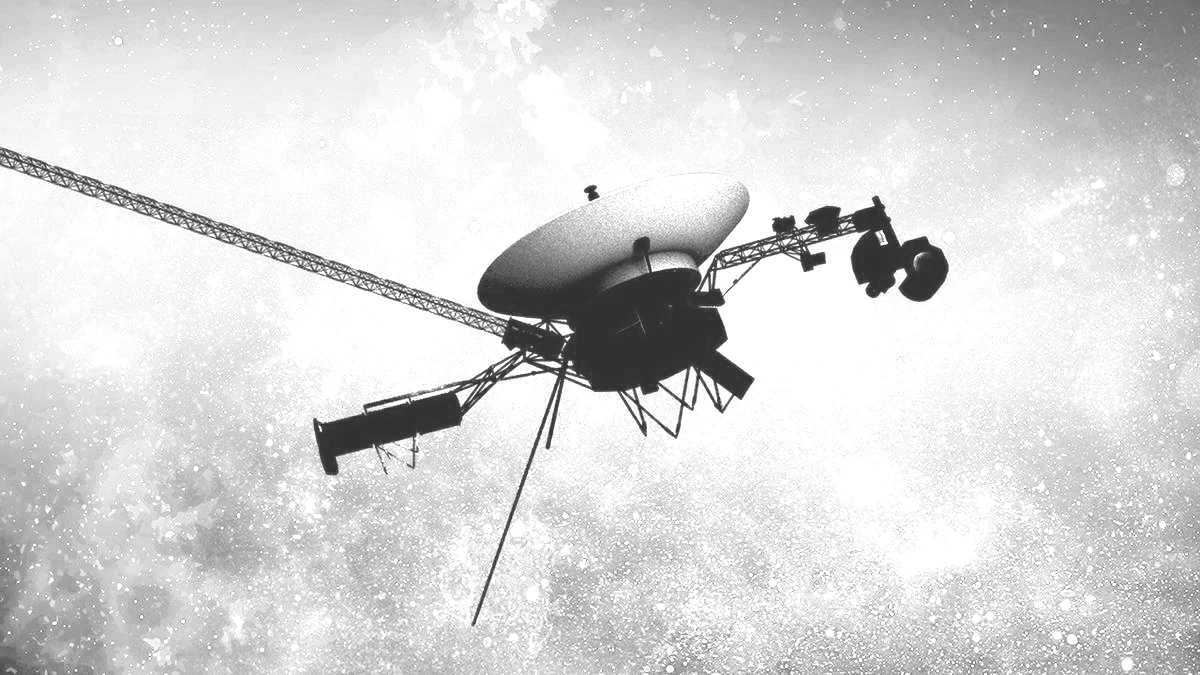
Like radio telescopes and space probes launched into the cosmos to capture faint signals from nearby yet entirely unexplored galaxies, pioneering devices that allow humanity to perceive and understand what lies beyond the limits of visibility, architectural probes can serve as instruments for investigating territories whose deeper dynamics remain hidden from immediate observation. In maritime practice, to sound means to measure the depth of the sea, to verify the configuration of the seabed, and to understand what remains invisible beneath the water’s surface. Likewise, terrestrial probes and geological core samples provide information about the deep structure of the ground, making it possible to read sedimentations, fractures, material compositions, and temporal traces that cannot be perceived at the surface. For a designer, probing a place would mean recognizing that knowledge of a territory is not necessarily something that precedes intervention, but something that can emerge through it. If, as previously argued, every analytical process is inevitably partial, subjective, and conditioned by the very presence of the observer, then the objective may no longer be to achieve complete knowledge before acting. Instead, it may become necessary to construct instruments capable of learning from a territory while simultaneously traversing and consciously transforming it. Such a position requires accepting, and no longer fearing,the transformative power of the observer.¹²
In this sense, probing acquires a meaning that extends beyond metaphor. It implies accepting that certain contemporary territories cannot be fully understood from the outside and that, precisely for this reason, knowledge must be constructed through progressive forms of interaction. It means replacing the logic of prediction with that of verification, and the search for definitive solutions with a process of continuous learning. This does not imply that design should renounce its transformative ambitions. Rather, it suggests that transformation itself can become one of the most effective means through which reality is understood. Generative architectures appear to offer precisely this possibility. They operate as territorial probes: they temporarily inhabit a place, activate its latent potentials, observe its reactions, and return information capable of guiding future interventions in a more informed and conscious manner. Their transitory nature should therefore not be understood as a limitation, nor as a provisional condition awaiting something permanent. On the contrary, it constitutes an essential quality that allows the relationship between knowledge and transformation to remain open and dynamic.
Probing thus emerges as a possible posture for contemporary design. It is a mode of action that does not seek to eliminate uncertainty but rather accepts it as an inevitable and productive condition. It is a way of intervening that acknowledges the fallibility of every interpretation and therefore seeks in built reality a continuous form of verification. Within this perspective, design is no longer merely what follows from knowledge of a territory; it also becomes one of the means through which such knowledge is produced. Architecture thus ceases to function solely as an instrument for the transformation of space and becomes a research practice capable of progressively rendering the complexity of contemporary places intelligible.
Notes
1. Vittorio Gregotti, Tempo e progetto, Skira, Milano 2020, p.75.
2. Fernand Braudel, I tempi della storia: Economia, società, civiltà, Dedalo, Bari, 1986.) (Fernand Braudel, La Méditerranée et le monde méditerranéen à l’époque de Philippe II, 2° éd. entièrement revue et augmentée, Armand Colin, Paris 1966 (1° ed. 1949); trad. it. Il Mediterraneo e il mondo mediterraneo nell’età di Filippo II, trad. di Cecilia Storti, Giulio Einaudi Editore, Torino 1986.
3. Werner Heisenberg, Fisica e filosofia, Il Saggiatore, Milano 1961, p.73.
4. Paul Feyerabend, Science in a free society, New Left books, London 1978, (trad. it. di L. Sosio, La scienza in una società libera, Feltrinelli, Milano 1981) Steven Shapin, The scientific revolution, University of Chicago Press, Chicago 1996, (trad. it di M.Visentin, La rivoluzione scientifica, Einaudi, Torino 2003, p. XI.
5. Thomas Kuhn, The Structure of Scientific Revolutions, University of Chicago Press, 1962, (Trad. it. di Adriano Carugo, La struttura delle rivoluzioni scientifiche, Piccola biblioteca Einaudi, Torino 2009.
6. Jorge Luis Borges, Adolfo Bioy Casares, (a cura di), Racconti brevi e straordinari, Adelphi, Milano 2020.
7. Alfred Korzybski, Science and Sanity: An Introduction to Non-Aristotelian Systems and General Semantics. Institute of General Semantics, Englewood, NJ 1933.
8. Summary of the concept explored in Gregory Bateson, Form, Substance and Difference, General Semantics Bulletin 37, Lakeville, CT 1970. Bateson takes up and deepens Korzybski's idea on cartography and the relationship between representation and reality.
8. Sintesi del concetto esplorato in Gregory Bateson, Form, Substance and Difference, General Semantics Bulletin 37, Lakeville, CT 1970. Bateson riprende e approfondisce l’idea di Korzybski sulla cartografia e sulla relazione tra rappresentazione e realtà.
9. Consider the Italian case, where the procurement phase alone takes 37% longer than the European average, better than Greece. (Elaborazione Ufficio Studi Confartigianato su dati Banca Mondiale-Doing Business 2020).
10. On the debate on the scientific nature of the project in research, see Roberta Amirante, Il progetto come prodotto di ricerca: un’ipotesi, (Alleli | Txt Vol. 4), LetteraVentidue, Siracusa 2018.
11. Michael Strevens, La macchina della conoscenza. Come l’irrazionalità ha creato la scienza moderna, trad. it di S. Frediani, Einaudi, Torino 2021.
12. The paraphrased concept appears in Kurt Lewin, Action Research and Minority Problems. In G. W. Lewin (Ed.), Resolving Social Conflicts, Selected Papers on Group Dynamic, American Psychological Association, Washington DC 1946, p. 143-152. and in Laura Saija, La ricerca azione in pianificazione territoriale e urbanistica, Franco Angeli, Milano 2017.