
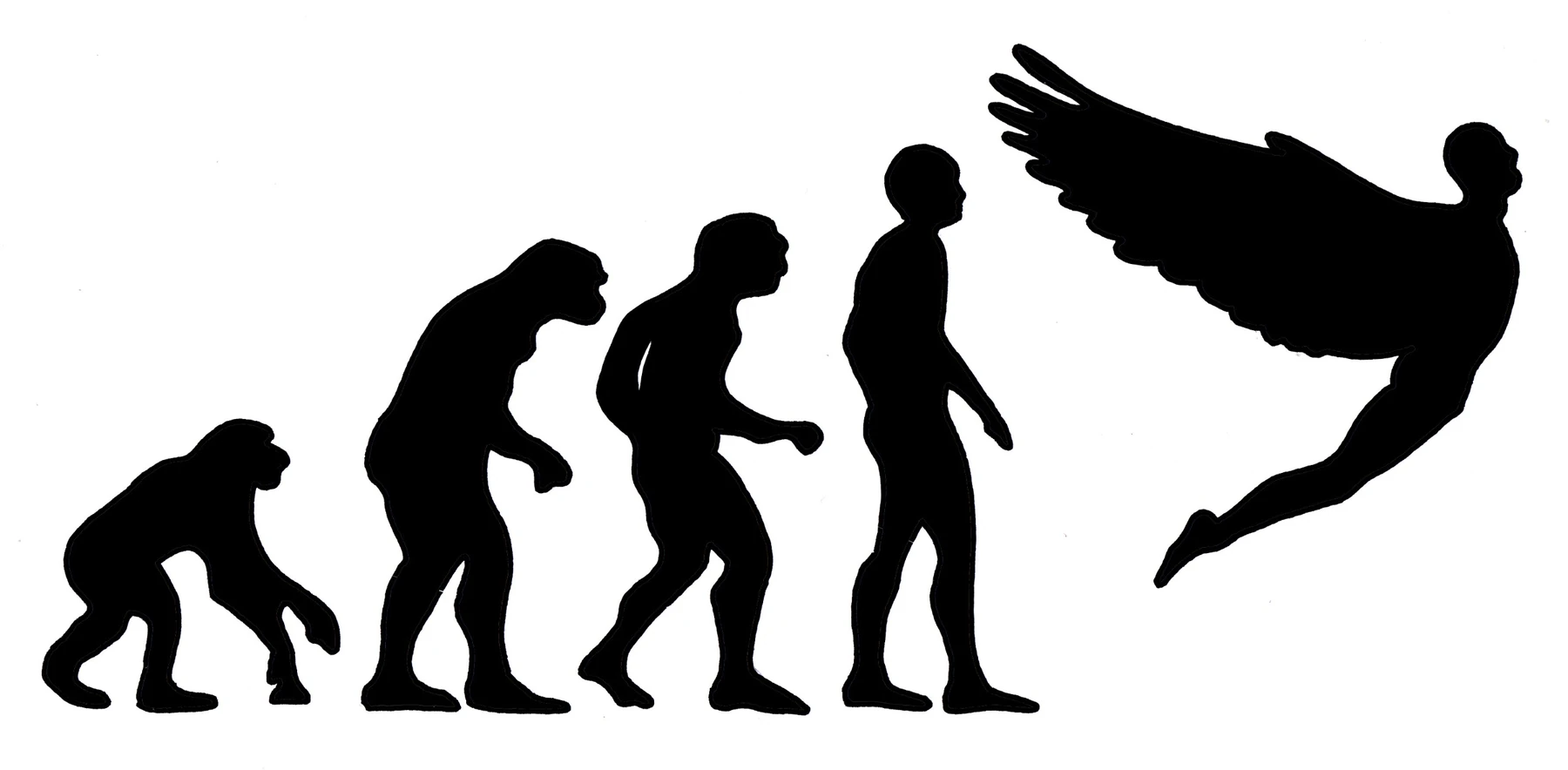
To generate is not the same as to make or produce. It is not simply a matter of placing an object in a site, occupying a space, installing an architectural form. To generate is, rather, to “make things happen”: to set in motion something that was not happening before, or that had stopped happening; to open up a possibility, set the conditions, make a behaviour practicable, suggest an action, or a desire. The generative nature of Unica Space Force’s architectures therefore does not lie in the mere act of “building” things, but in constructing the conditions in which people, places, uses, relationships and imaginaries can begin to do something together.
To generate is contained in the word regeneration. This is no accident, although it often goes unnoticed. Urban regeneration is often presented as an outcome: a redeveloped neighbourhood, a public space put back into shape, a recovered building. But if we want to talk about regeneration, we should think less about the outcomes and more about the spark: before a transformation is accomplished, there has to be a generative act that widens the field of the possible. It is the active, risky, experimental, and not wholly predictable part of a re-generative process. It is what allows a place to move out of waiting, suspension, abandonment, without immediately claiming to settle its final destiny.
The constructions of Unica Space Force are architectures in the full sense of the word, but they are also devices: not in a mechanical sense, but in the productive sense of structures that create a disposition of things. They arrange space, orient bodies, make encounters possible, open thresholds, suggest postures, favour uses. A device on which one can sit is not simply a seat, and it does not generate only the act of sitting. It generates a permanence. Permanence generates a gaze. Gaze generates recognition. Recognition generates care. In this way, a small platform can become many things: a stage, a table, a threshold, a game, a place of idleness, a micro-agora, a temporary support for people who may want to be alone or together, and who did not yet know they could gather there. Generativity lies in this chain of consequences: not entirely designed, but made probable by the design.
This is why it is useful to read generative architectures in terms of the spatial and social affordances they create. The first are relatively evident: sitting, lying down, lingering, crossing, climbing, taking shelter, looking. The second, social affordances, are subtler, but no less important: being together or in solitude; displaying and exposing oneself; recognising one another; negotiating; taking care; organising; claiming; imagining; playing. A good generative architecture does not prescribe a single behaviour. It multiplies possibilities so that different uses and behaviours can emerge, without telling the space what it must be once and for all.
Among these possibilities is also “ozio creativo”, the creative idleness. The spaces of contemporary cities often seem unable to legitimise time that is only apparently unproductive: time spent lingering, playing, talking, uselessly inventing, creating without purpose, being present without consuming. And yet much public space could arise precisely from this: from the possibility of being in the place without immediately having to buy, go somewhere, perform, justify oneself. Generative architectures enable places for an idleness that is not passive, but fertile: spaces where children, students, elders, passers-by and inhabitants can linger and combine unforeseen activities. Creative idleness is therefore a form of social affordance, because it frees time and attention; and where attention is freed, civic care for places can often arise. Including that which, to put it with Jane Jacobs, allows strangers to share the same places on civil terms, dignified and reserved, without having to appeal to imaginary “local communities”: true public spaces where many different people can coexist and be fine, even when they do not know one another in any intimate or private sense, and even when, in many cases, they have no wish to know one another in that way.
There is, then, an important difference between equipping a space and re-generating it. To equip means to provide functions. To generate means to set up ecologies of use. A playground may be technically complete and socially mute; a small generative architecture may be materially elementary and socially dense. Quality does not depend on the quantity of resources inserted, but on the device’s capacity to intensify relationships between people, activities and places. A simple architecture, if carefully conceived, measured and proportioned, can instead catalyse attention and respect. In short, we like to imagine our architectures as functionally under-determined: open enough for people to project onto them the use they wish to make of them, to explore them even playfully, and above all to allow different people to enter into relation in many different ways with one another. Ultimately, to deal with space is to deal with relations between people.
From this perspective, the modular character of these architectures is not merely a design or construction expedient, but a strategy of optionality. The module is not there only to speed up assembly, ease transport, reduce costs or simplify the building site. It is there to keep architecture open. It makes it manipulable, reconfigurable, adaptable, correctable, reusable. The module does not define a form to be repeated, but a field of transformations. It is a minimal grammar: stable enough to be recognisable, open enough to produce different configurations each time it encounters a place, a community, a constraint, a construction site, an unforeseen use.
Generative architectures are fast&frugal. This is not superficiality or haste, but a form of parsimony, of wanting not to waste time and human energy. If the Manifesto insists on time as a precious material of the project, here we want to emphasise a further consequence: speed is not hurry, but a form of responsibility towards places that have already waited too much. They have waited for projects, funding, plans, decisions, procedures, permits, changes of administration, more urgent priorities. They have waited so long that they have often become invisible. The generative intervention enters this suspended time with a form of operational immediacy: not to replace structural transformations, but to anticipate them, question them, test them. Its temporariness is not a renunciation of durability; it is a way of not confusing duration with rigidity.
For this reason, as we say in our Manifesto, generative architectures work like pioneer species. They lightheartedly colonise inhospitable territories, not in order to occupy them definitively, but to measure their availability to be inhabited. They are provisional presences that test the transformability of a space and people’s willingness to recognise it as part of their livelihood. Just as pioneer species in ecosystems prepare the ground for later forms of life, these architectures prepare a place for later modes and forms of use. They do not always have to be replaced by permanent works; at times their unstable, open, experimental condition is exactly what the place needs. In any case, they allow to learn before consolidating.
It is here that the properly antifragile nature of generative architectures emerges. Let us recall: a thing or a system is fragile if events, unforeseen occurrences, disturbances, volatility, disorder – that is, time – can only harm it. A thing or a system is robust if events, disturbances, volatility, disorder – and hence time – neither harm nor benefit it: a robust system withstands and remains as it is. In resilience, the system absorbs the shock, perhaps bends, but then recovers and returns to the previous equilibrium, or to its functional equivalent. But a thing or a system is properly antifragile if, from disturbance, uncertainty, unpredictability – from everything time does to things – it can also gain, evolve, adapt, improve.
Generative architectures are antifragile not because they are indestructible, but because they are designed to learn from use, incorporate error, and turn uncertainty into knowledge. If they do not work, if they are not liked, if they are not used, little is lost: little money, little time, little human energy, little land, little matter. But ff they do work, much is gained: new uses, new relationships, new evidence, new public attention, new trust. This asymmetry between limited losses and potentially large gains is one of their strongest qualities.
From this standpoint, generative architectures are a form of antifragile public policy translated into architecture. Every public policy, every plan, every project contains some form of prediction; and every prediction, especially when it concerns complex social systems, is exposed to error. The answer cannot be inaction, because policies, plan and designs are necessary. But nor can it be the arrogance of “strong prediction”, the prediction that claims to know in advance exactly what will happen, when, with what intensity and with what effects. We must therefore design in ways that reduce the cost of error and increase the capacity to learn. This is what generative architectures do: they do not replace prediction with improvisation, but with a “weak prediction” – prudent, experimental, capable of testing scenarios at full scale.
Their temporariness is therefore an exploratory and cognitive technique. It allows us to see what happens when a place is perturbed by an object that is interesting, useful, accessible, unexpected. It allows us to observe who arrives, who stays, who modifies, who protects, who ignores, who contests, who appropriates. It allows us to understand which uses were merely imagined and which actually take root. It allows us to recognise the distance between the drawn design and the inhabited project. Starting from this idea of the project as an instrument of interrogation, we might say that every generative architecture is a built question: not a closed answer, but a material test addressed to a place and to its people.
Reversibility, too, is a figure of antifragility, and here it has a political value. In the contemporary city, many decisions are fragilising because they are too large, too little modular, too costly to be corrected. Megaprojects, large investments, grand promises: if the prediction is wrong, the error becomes durable, a burden hard to remove. Generative architecture proceeds in the opposite direction: modular, small before large, reversible before definitive, adaptable before rigid, test before consolidation. Not because small is always beautiful and better than large, but because under conditions of uncertainty, small allows us to learn without producing irreversible damage. Perhaps, in general, it would be useful to think less about large projects and more about “great projects” that can nevertheless grow out of many small works, coordinated, verified and adjusted over time. A large project, by contrast, often requires us to believe, before knowing.
This stance incorporates another trait of antifragility: the via negativa. Remove rigidity, remove excessive functional determination, remove unnecessary costs, remove disproportionate procedures, remove the obsession with the final outcome when the problem is still to understand the field. Better less, but better!
And yet such subtraction does not impoverish the project. It forces the project to distinguish what is structural from what is accessory, what truly orients uses from what merely produces noise. It is a form of design discipline that does not banalise space; on the contrary, it makes space more available to life.
What distinguishes Unica Space Force is not only the production of modular, reversible and adaptable objects. It is the self-construction as a technical and social process, made safe, organised and replicable. This is decisive, because self-construction is often perceived as a marginal, ephemeral, generous but improvised practice. Here, instead, it becomes method, discipline and system. The production of the main components remains entrusted to skills and supply chains capable of guaranteeing quality, safety and compliance; final assembly becomes the moment in which the community enters the process not as a public to be consulted, but as an operational body. Participation is not only a matter of talking about the project. One participates by building part of it, sharing effort, responsibility, attention, error, result. This is where the three meanings of the word construction emerge. There is construction as produced object: physical devices, reconfigurable, demountable, integrable, capable of accommodating different uses. There is construction as process: co-design, assisted self-construction, management, maintenance, possible transformation over time. And finally there is the construction of relationships: bonds between inhabitants, students, administrations, economic actors, designers, craftspeople, institutions. These three levels cannot be separated and form a circle: the object is poor if it does not generate process; the process is weak if it leaves no relational traces; the relationship is fragile if it does not find an object, even a provisional one, around which to recognise itself.
The construction site, from this perspective, is not only the place of building execution. It too is a political place: the first environment for the direct manipulation of space and the controlled testing of the project. Unlike conventional participatory practices – meetings, assemblies, questionnaires before the intervention – the process of self-construction reverses the sequence: it begins with the material transformation of space, in order to test relationships, transformative intentions and appropriative drives, and to confront directly material constraints, operational times, unequal skills, desires that are not always compatible, micro-conflicts, hesitations, adjustments. For precisely this reason, assisted self-construction should not be understood as simple operational participation in the building process. It tests the device, but also the community that builds it: it turns the process into a collective story in which things may take unexpected turns, generate conflict, but also produce a mutual adjustment of expectations and the possibility, though never guaranteed, of a recomposition capable of generating culture.
In this sense, the practice of self-construction has the power to make visible what was already present but not yet active. The stale, lazy expression of “urban void” should in fact be banished from our vocabulary. A place that appears abandoned is never truly empty. It contains memories, conflicts, potentialities, interrupted habits, trajectories, minute economies, desires in waiting. Generative architecture therefore acts as a revealing instrument. It shows that the void was never really void; that the leftover space could become a threshold; that the underused square could host play, celebration, encounter, rest; that the people who inhabit that neighbourhood might perhaps still find the willingness to recognise themselves around something. To generate means to reveal, to discover, to open oneself to serendipity, sometimes to stumble abruptly onto all this – but not to impose.
Seen under this light, the relation between temporary and durable is never straightforward. Not everything temporary is ephemeral, and not everything permanent is durable. There are stable structures that produce no memory; there are brief installations that change the way a place is perceived for years. True duration does not always coincide with the permanence of matter. Sometimes it lies in the continuity of a practice, in the birth of a group, in subsequent care, in the political question that the intervention has made possible to formulate: why can this space not be like this more often? why can it not be maintained? why can it not become ordinary policy? When a temporary architecture produces these questions, it has already exceeded its own temporariness. In short, temporary does not necessarily mean transitory, and vice versa.
Naturally, none of this removes the need for planning, public investment, permanent projects. On the contrary, it can make them more intelligent. Generative architectures are not the poor cousin of conventional urban transformations: they are a tool for orienting them better. They allow public administrations, for instance, not to decide completely in the dark; designers not to confuse intention with use; inhabitants not to be merely recipients; future investments to rest on richer evidence. In this sense, they are light infrastructures of public knowledge.
To generate means, finally, to accept that the city is not made only of forms, but also of practices of use and behaviours. For architects and urbanists, the principle of freedom at work in social systems has an important corollary: people will do things their own way and will bend things to their own purposes. This is not necessarily good or bad, but it is certainly an irreducible fact, and a lesson that architects and urbanists would do well to stick well in their heads. People modify, distort, bend the means at their disposal to their own ends. Users do it with technologies, students with schools, children with games, inhabitants with their cities — transforming, for example, non-places into places, and vice versa. That said, behaviours are never, of course, the product of “freedom in a vacuum”: they are largely mimetic and depend on cultural processes, fashions, conditioning, ideologies, the invention of traditions, advertising, and so on.
People, then, do things their own way: they bend, deform, reinterpret, sometimes betray, and sometimes save projects. The issue is not to eliminate this freedom, but to design spaces capable of feeding on it. Generative architectures do not fear creative appropriation: they seek it, within conditions of safety, care and quality. They do not fear that use may change the meaning of the work; on the contrary, they pursue an increase in optionality, in the possibility of adaptations and exaptations, and favour the accommodation of a multiplicity of ends, needs and desires — present and future. They know that only under these conditions does an architecture become a city: city as a common platform for the expression of the heterogenesis of ends, a shared cultural and spatial context within which many different people choose and pursue their different aims or objectives through the encounter between human agency and the multiplicity of opportunities the city offers, by virtue of its physical fabric, the way it is designed, organised and regulated, and the social practices through which space is used.
This, then, is the most politically concrete value of generative architectures. At a time when many urban policies swing between grand promises and minor powerless maintenance, these architectures propose a third way: to act immediately without claiming to solve everything; to build small in order to learn big; to take controlled risks in order to increase the chances of success; to leave traces on people as much as on spaces; to use architecture not as ornament, but as civic energy. They are hence little machines of urban antifragility: they do not promise to predict the future, but help places and communities prepare for multiple possible futures.
To generate, ultimately, is this: to create the conditions for reality to surprise without destroying, to change without erasing, to welcome the unexpected without being overwhelmed by it. It is a small gesture with large ambitions. It is a politics of space that does not fear provisionality, because it knows that the city lives through trials, adaptations, returns, deviations, sedimentations. It is a way of making architecture and urbanism that does not merely occupy the world, but interrogates it; that does not close places into a function, but reopens them to use; that does not produce only objects, but generates present possibilities, and possible futures.